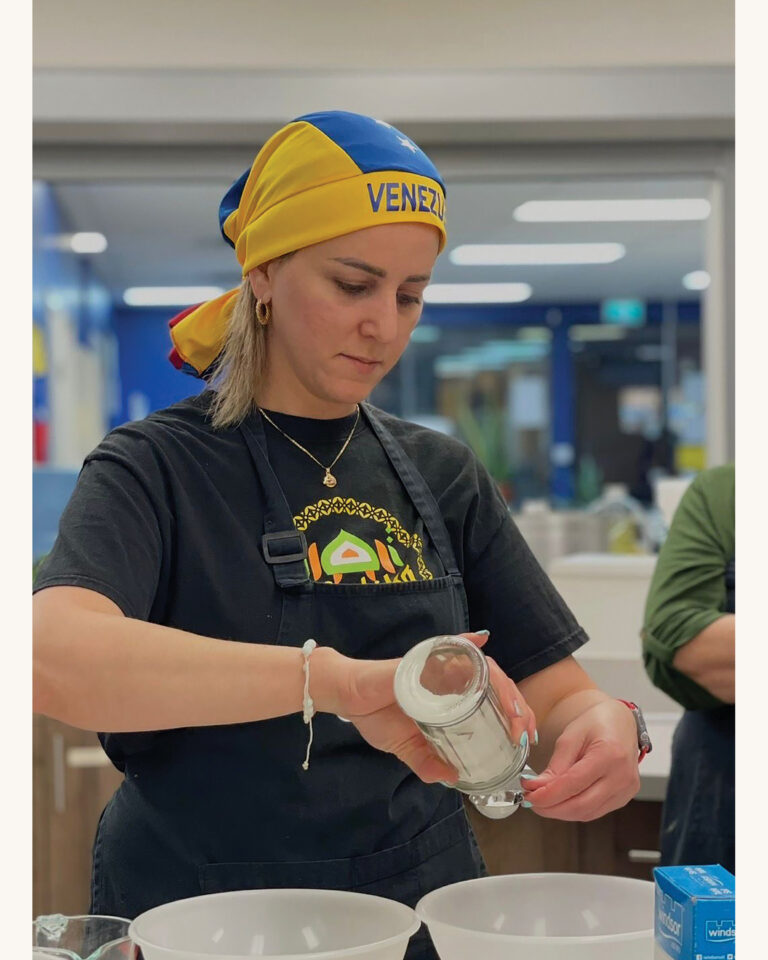
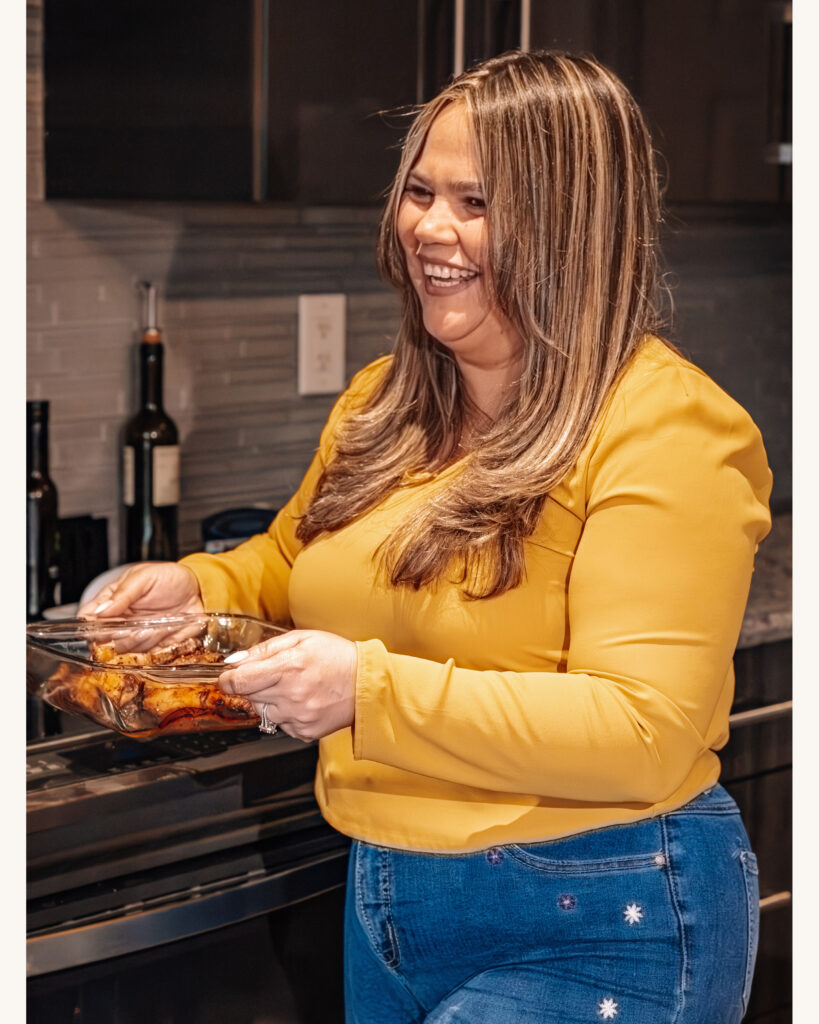
An engineer, leader and mother, Mairim uses food, family traditions and community to carry Venezuela with her in Canada.
I was born in Venezuela, in a home where the kitchen was the heart of everything. Food was not only prepared there; memories were woven there. The sound of sofrito began long conversations, family laughter and the comfortable silences that exist only when one feels at home. I grew up understanding that love could be expressed through wooden spoons and recipes made patiently again and again.
I studied mechanical engineering because I have always wanted to build. I loved solving problems, understanding systems and leading projects. Over time I discovered that what moves me most is not only the structure of machines, but the structure of people: supporting, guiding and opening paths. Building community is also a form of engineering.
My husband and I chose Canada with both our heads and hearts. We wanted stability, opportunity and a future of open possibilities for our children. I knew I would need to start again professionally, validate credentials and learn different systems. What I did not know was how much I would grow within myself.
One of the greatest challenges was proving my value again in a different system. Like many immigrants, I felt I had to explain myself all over again. But I understood something essential: my experience did not stay behind; it crossed the border with me. My discipline, leadership and resilience were still intact.
In that rebuilding process, cooking became my quiet refuge. Making pabellón or frying arepitas was a way to anchor myself and remember: I am still me, even when everything around me is new. Traditional food means love, roots and continuity. Every December I make hallacas with the care my family used in Venezuela. Now my children take part, ask questions and hear stories as we wrap them. It is not only a tradition; it is continuity.
When my mother visits and makes black beans, time seems to stop. The aroma fills the house and the distance disappears for a moment. The people I love live in my memories through smell and flavour: the pasta I cooked with my father, my grandmother’s fried arepitas and my mother’s soup. I hope that one day my children taste a soup and say, “It tastes like Mom’s.”
My professional and cultural identities do not compete; they strengthen each other. Engineering taught me structure, vision and strategy. My culture taught me warmth, community and generosity. I lead with both. I can plan a project precisely and also think about who will sit at my table. Cooking for the people I love is a quiet act of leadership.
I miss the immediate closeness of my country and flavours that carry history, but I have learned that home can be rebuilt wherever we are when we keep our roots alive. To women considering migration, I say: do not underestimate your story. Migration is not starting from zero; it is starting with experience, memory and strength. Our roots do not hold us back; they sustain us. I dream of continuing to grow, opening spaces for other women and leading with purpose, while my home always smells of freshly made food, love, belonging and home.